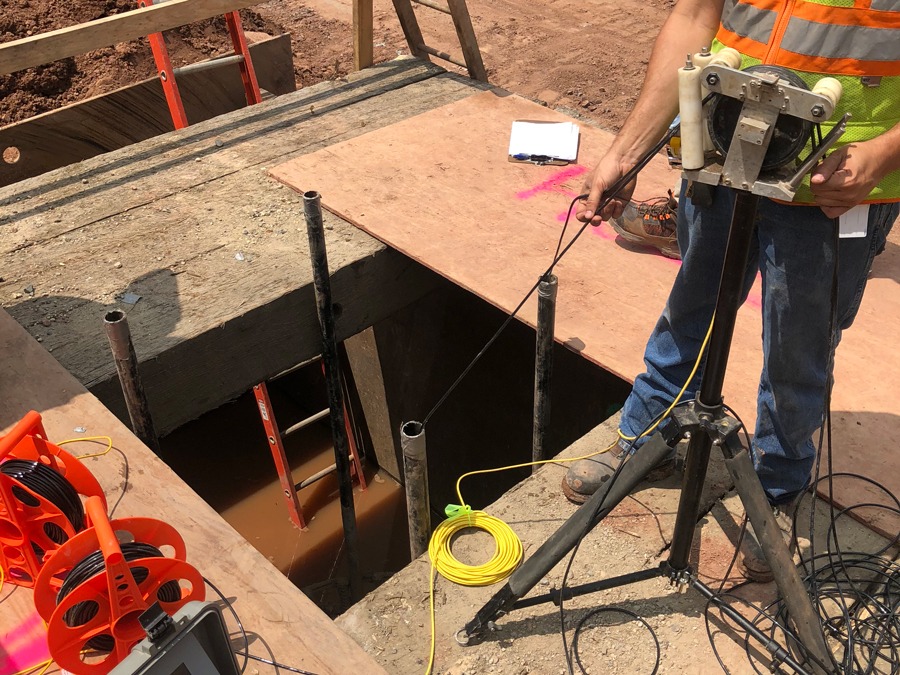
Crosshole tomography has emerged as a pivotal technique in geotechnical and structural engineering, primarily used for evaluating the integrity of concrete structures and subsurface geology. This technique involves sending signals between a series of boreholes to create detailed images of the subsurface, allowing engineers to assess the condition of the materials and identify any potential defects or anomalies. Understanding the fundamentals and advancements in crosshole tomography is essential for professionals seeking to ensure the safety and longevity of infrastructures.
Understanding Crosshole Tomography
Crosshole tomography, often referred to as crosshole sonic logging (CSL), is a geophysical method used to evaluate the quality of concrete in deep foundations. It operates by transmitting ultrasonic waves between multiple boreholes drilled into the ground or through structural elements. The travel time and attenuation of these waves provide critical data that can be analyzed to produce high-resolution images.
Benefits of Crosshole Tomography
- Provides detailed 3D images of subsurface structures.
- Identifies voids, honeycombing, and other structural anomalies.
- Enhances the assessment of foundation integrity and material homogeneity.
- Non-destructive and highly accurate, ensuring minimal impact on the structure.
Applications in Engineering
Crosshole tomography is extensively applied in various engineering fields, including:
- Infrastructure Projects: Used to assess the integrity of bridges, dams, and other critical structures.
- Geotechnical Engineering: Helps in understanding subsurface conditions for tunneling and mining projects.
- Environmental Studies: Utilized in monitoring groundwater contamination and assessing soil properties.
For further insights into its applications, learn about our tailored solutions and how they can be integrated into modern engineering practices.
Technological Advancements
Recent advancements in crosshole tomography technology have significantly enhanced its precision and applicability. Modern systems offer:
- Improved Data Resolution: State-of-the-art equipment provides higher resolution images, allowing for more accurate analysis.
- Advanced Signal Processing: Enhanced algorithms for data interpretation increase reliability and efficiency.
- Portability and Ease of Use: Newer models are more compact and user-friendly, facilitating on-site operations.
Explore advanced guides and tips for implementing the latest crosshole tomography techniques in engineering projects by visiting this resource.
Best Practices for Crosshole Tomography
Implementing effective crosshole tomography involves adhering to several best practices:
- Proper Borehole Placement: Ensure boreholes are strategically placed to cover the area of interest comprehensively.
- Accurate Calibration: Regular calibration of equipment is crucial for maintaining measurement accuracy.
- Data Analysis and Interpretation: Employing skilled analysts to interpret data ensures accurate identification of subsurface conditions.
- Continuous Monitoring: Regular monitoring can detect changes over time, providing early warnings of potential issues.
For professionals seeking to refine these techniques, discover expert strategies here.
Conclusion
Crosshole tomography stands as a cornerstone method in the realm of structural assessment and geotechnical investigations. Its ability to provide insightful, non-destructive analysis makes it an invaluable tool for engineers and environmental scientists alike. As technology continues to advance, the capabilities of crosshole tomography are expected to expand, offering even greater precision and applicability. Find out more about this approach and leverage its potential to enhance engineering outcomes.